Featured Conversations · May 16, 2025
The Pragmatist's Guide to AI: AbbVie's Sergio Gutierrez-Montero on Strategy, Value, and Real-World Adoption
By Khullani M. Abdullahi, JD
Workforce, Equity & TalentEnterprise AI Strategy
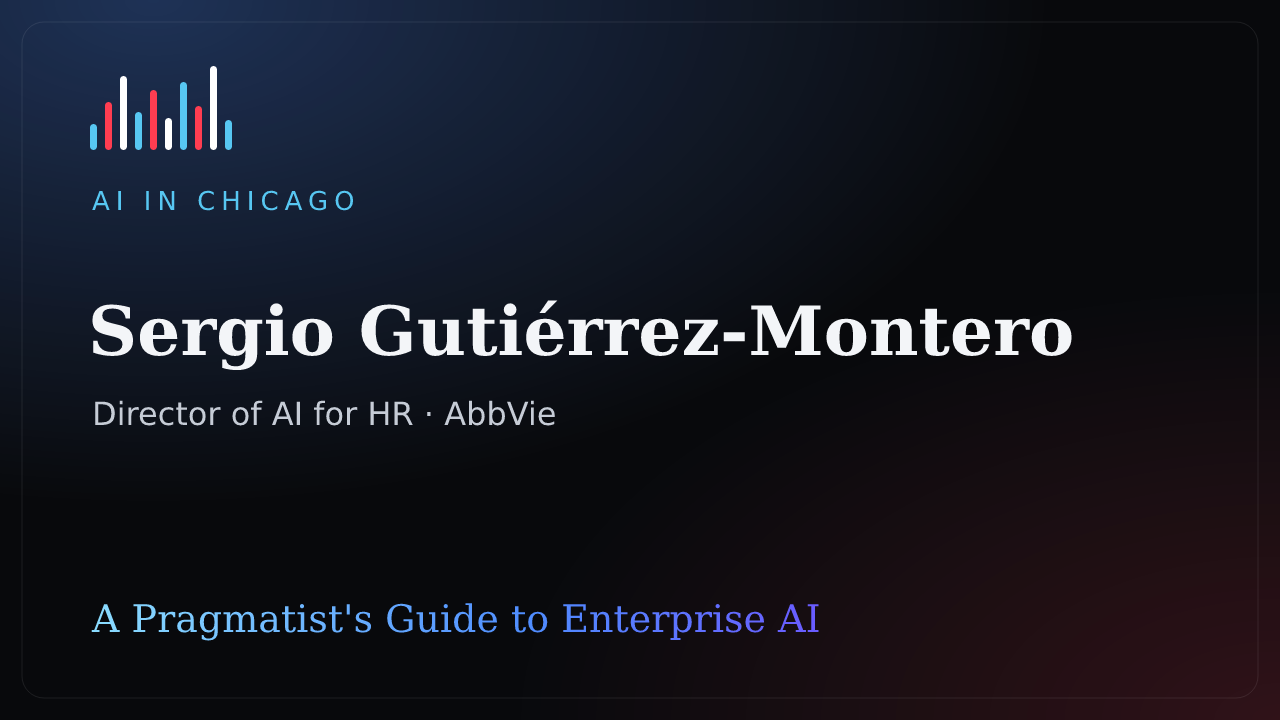
It was such an enlightening experience to interview Sergio Gutiérrez-Montero of AbbVie. In the interview, Sergio, who identifies as an AI Pragmatist, advocates for a pragmatic, problem-focused approach to artificial intelligence. Speaking on the AI in Chicago podcast, Sergio, who is the Director of AI Strategy & Implementation for HR at the Illinois-headquartered biopharmaceutical giant, shared his insights on navigating the hype, fostering genuine adoption, and building a resilient AI strategy.
The Heart of the Pragmatic Approach
Sergio's philosophy centers on a simple but powerful question: What problem are we solving? In a landscape awash with AI tools and vendors, it's easy to get distracted by technology for its own sake. The pragmatist's approach reorients the conversation towards business impact and user needs.
"Anyone selling you something that's too good to be true, it's too good to be true," Sergio warns. He emphasizes the importance of rigorous evaluation and pilot programs rather than leaping at every new AI capability that comes along.
Driving Adoption Through Value
One of the critical challenges in enterprise AI is moving beyond successful pilots to widespread adoption. Sergio argues that adoption follows value: when employees see AI tools genuinely making their work easier or more effective, adoption happens naturally.
This requires investing in understanding user workflows, not just deploying technology. Sergio's team spends significant time shadowing end users and understanding their pain points before designing AI solutions.
Building Enterprise AI Capabilities
For large enterprises like AbbVie, building AI capabilities requires navigating complex organizational structures and competing priorities. Sergio emphasizes the importance of executive sponsorship and clear communication about AI's role in organizational strategy.
"You need champions at multiple levels," Sergio explains. "Executive support gives you resources and legitimacy. But you also need grassroots advocates who understand the day-to-day realities of how work gets done."
The HR Perspective on AI
Sergio's focus on HR applications provides interesting insights into one of AI's most sensitive domains. HR decisions affect people's livelihoods and careers, creating both opportunities and risks for AI deployment.
He emphasizes the importance of transparency and human oversight in HR AI applications. Employees need to understand how AI influences decisions that affect them, and there must always be human review of significant determinations.
Looking Ahead: The Democratization of AI
Looking ahead, Sergio anticipates that while jobs will undoubtedly change, the narrative of mass unemployment is overly simplistic, especially given the slower pace of AI adoption within large, often "ossified" enterprises. He sees the increasing democratization of AI tools, driven by falling compute costs and more efficient model training methods, as an opportunity. This could lower barriers to entry and allow smaller companies to innovate at a higher rate, while also enabling larger enterprises to access powerful technologies more affordably.
Ultimately, success in AI implementation will be measured by straightforward KPIs: "Are people using it?" and "What is the actual value of people using it?" in terms of efficiency gains or shortened workflows.
Echoing Reid Hoffman's concept of "super-agency", Sergio concluded on a note of optimism and empowerment. "At the end of the day, it's going to come down to how we want to use the technology... Everybody's gonna have a role in shaping what the solution looks like." His message is clear: a pragmatic, problem-solving, human-centric approach will be key to successfully navigating the age of AI.